Strength
Squat, hinge, push, pull, carry and core work using appropriate resistance, repetition ranges and progression.
The DB Method guide
You do not have to choose between being strong and moving well.
Pilates develops control, precision and movement awareness. Progressive resistance training develops strength, muscle and resilience. A considered programme gives each discipline a clear job—and enough recovery to do it well.
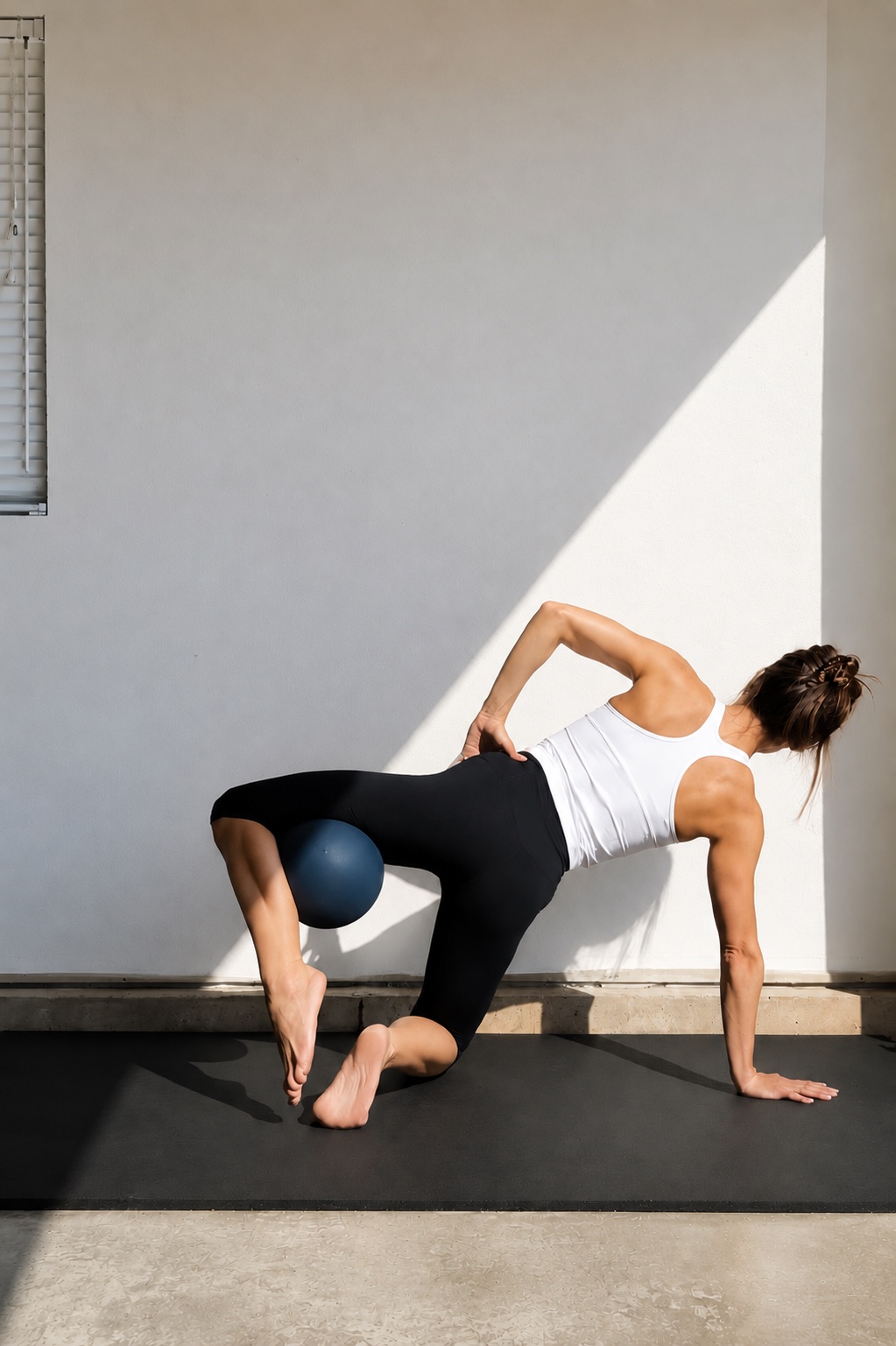
Different tools. Different adaptations.
Pilates can challenge muscular endurance, stability and control. It can make you more aware of position, breath and how one part of your body moves in relation to another.
Progressive resistance training uses external load and planned progression to create adaptations that Pilates alone may not target as efficiently: greater maximal strength, muscle development and confidence under progressively heavier resistance.
The question is not which one is universally better. It is which adaptation you need, which method is best suited to it and how both fit into the week you can actually recover from.
Equal pillars
Squat, hinge, push, pull, carry and core work using appropriate resistance, repetition ranges and progression.
Enough mechanical tension, volume and consistency to support muscle development over time.
Precise movement, trunk control, stability and awareness that can improve how training feels and is performed.
Usable range developed through movement, strength and control rather than flexibility without context.
How to combine them
Your schedule should reflect your goal, training experience and recovery—not a rigid ratio copied from somebody else.
If strength or muscle is the goal, protect the quality and progression of strength sessions first.
Use it for control, trunk work, movement practice, mobility or lower-load training—not as a vague add-on.
Hard lower-body Pilates and demanding leg training still create fatigue. Programme the total week, not isolated class names.
Keep enough space for sleep, nutrition and adaptation. More sessions are not automatically a better programme.
Practical examples
Begin with two or three well-designed strength sessions and one or two Pilates sessions, leaving space between the most demanding work where useful.
Begin with two Pilates sessions and two full-body strength sessions. Progress resistance gradually while keeping the weekly structure realistic.
These are examples, not prescriptions. Your training history, exercise selection, session intensity, schedule and recovery capacity determine what is appropriate.
Experience both in Koh Samui
Explore the DB Method women’s retreat where training, recovery and the pleasure of travel belong in the same considered programme.